
 English
 русский
 Français
 Español
Content
- 1 The Vinyl vs. PVC Confusion Is Costing Buyers More Than They Realize
- 2 What Vinyl and PVC Actually Are — A Chemical Starting Point
- 3 How the Two Materials Differ in Construction and Performance
- 4 Where Each Material Belongs: Industrial vs. Light-Duty Applications
- 5 Making the Right Call: A Practical Selection Framework
The Vinyl vs. PVC Confusion Is Costing Buyers More Than They Realize
Walk into any industrial procurement conversation and the terms "vinyl" and "PVC" will be used interchangeably within the first five minutes. In many commercial contexts that casual equivalence causes no harm. In others — particularly when specifying tarpaulins, tensile fabrics, inflatable structures, or industrial covering materials — it leads directly to the wrong product arriving on site, underperforming in the field, and requiring replacement far sooner than budgeted.
The confusion is understandable. PVC is a type of vinyl, the two terms share decades of overlapping industry usage, and manufacturers themselves often print "vinyl" on product literature when the material is technically PVC-coated polyester. But the overlap is not total, and the differences that exist carry real performance implications. Understanding precisely what each term means — and where they diverge — is increasingly important as procurement teams demand tighter material specifications and longer service life from industrial fabrics and covering solutions.
What Vinyl and PVC Actually Are — A Chemical Starting Point
The word "vinyl" describes a functional group in organic chemistry: specifically, the ethenyl group (–CH=CH₂), a carbon-carbon double bond structure that forms the backbone of a wide family of synthetic polymers. Vinyl is therefore a category, not a single material. Several distinct polymers carry the vinyl designation: polyvinyl acetate (used in adhesives), polyvinyl alcohol (used in films and coatings), ethylene vinyl acetate or EVA (used in wire coatings and foam), and polyvinyl chloride, better known as PVC.
PVC is one specific member of the vinyl polymer family. As explained by the American Chemistry Council's polymer chemistry resource on polyvinyl chloride, PVC is formed by polymerizing vinyl chloride monomers (C₂H₃Cl), producing a molecular chain in which 60% of the mass comes from chlorine derived from salt and only 40% from petroleum-based feedstocks. That chlorine content is what distinguishes PVC from other vinyl polymers and gives it its characteristic fire resistance, chemical inertness, and durability under prolonged weathering.
The practical shorthand, then, is this: all PVC is vinyl, but not all vinyl is PVC. When the word "vinyl" appears on a product specification sheet, it is worth determining which specific polymer is actually present — because the performance profiles differ considerably depending on the answer.
How the Two Materials Differ in Construction and Performance
In the context of tarpaulins and industrial fabrics — where the distinction carries the most operational weight — "PVC tarpaulin" and "vinyl tarpaulin" typically refer to two different manufacturing constructions, not just two names for the same thing.
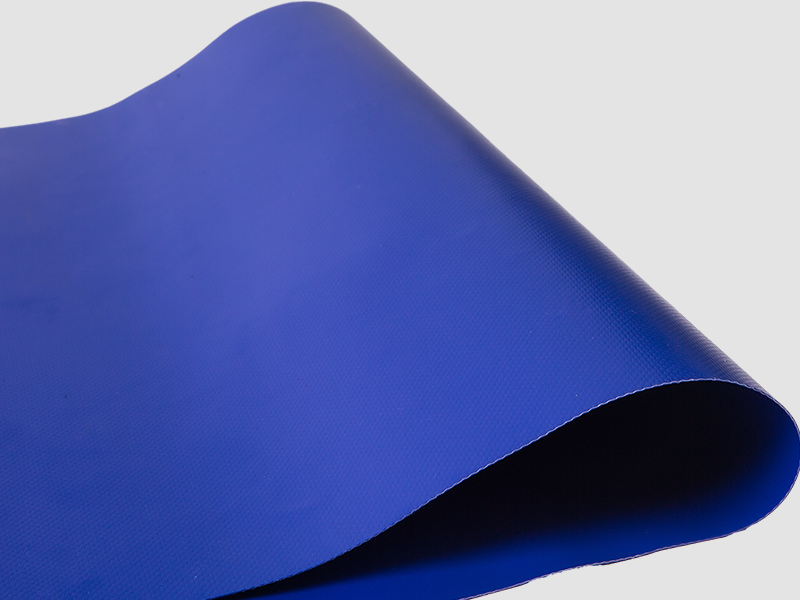
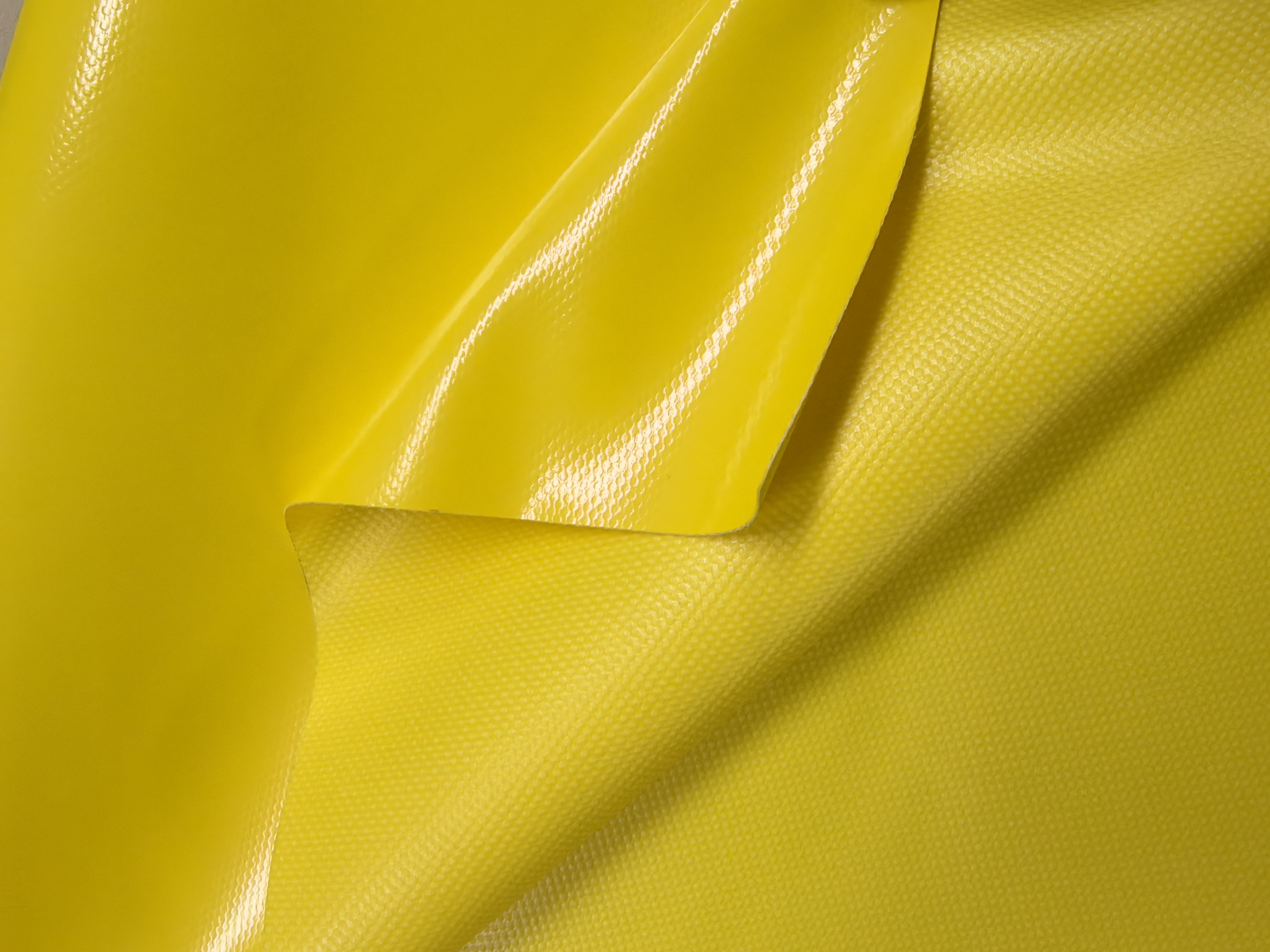
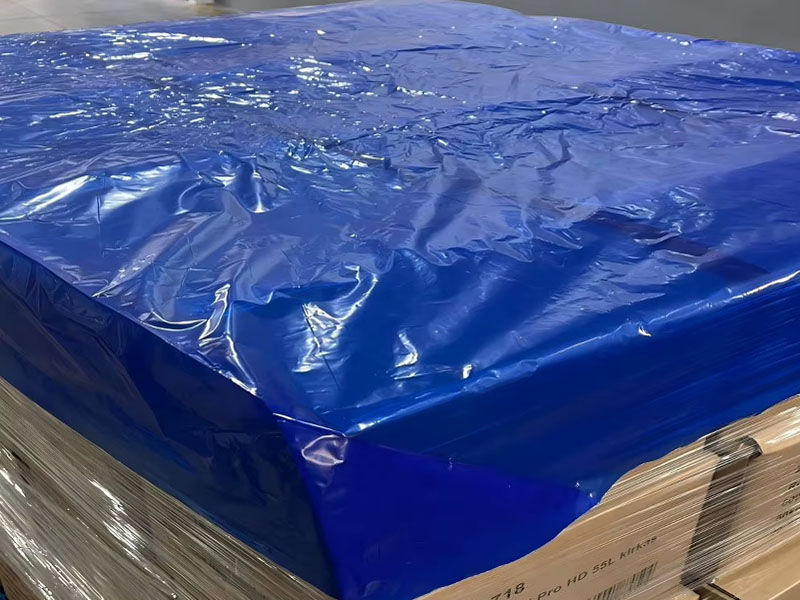
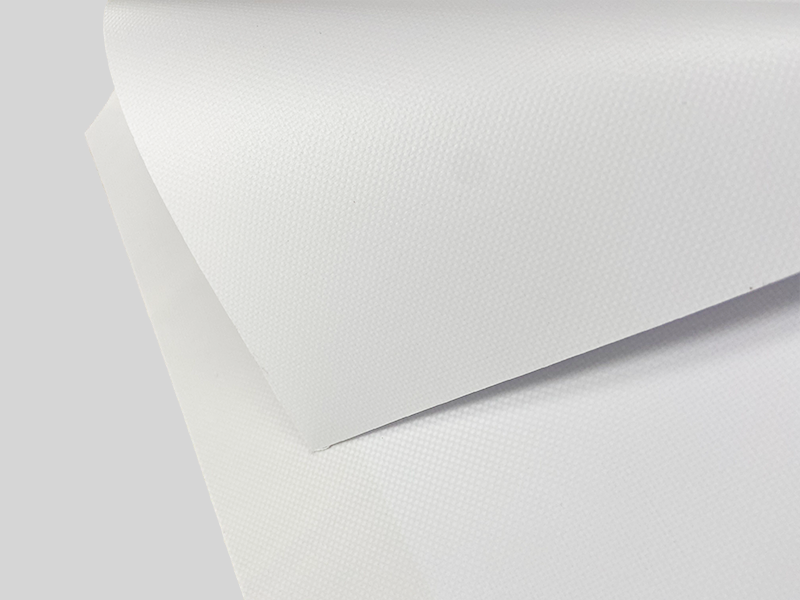
A PVC tarpaulin is built around a high-tenacity polyester base fabric (the scrim), which is then coated on both sides with PVC compound through a knife-over-roll or calendering process. The PVC coating bonds chemically and mechanically with the polyester fibers, creating a unified laminate with tensile strength, tear resistance, and dimensional stability that neither the fabric nor the coating could achieve alone. Before coating, the PVC compound is formulated with a specific additive package — UV stabilizers, plasticizers, fire retardants, anti-mildew agents, and antistatic components — allowing the final product to be engineered for the precise performance envelope the application demands. Industrial-grade PVC coated tarpaulin built for heavy-duty outdoor protection is the direct output of this process.
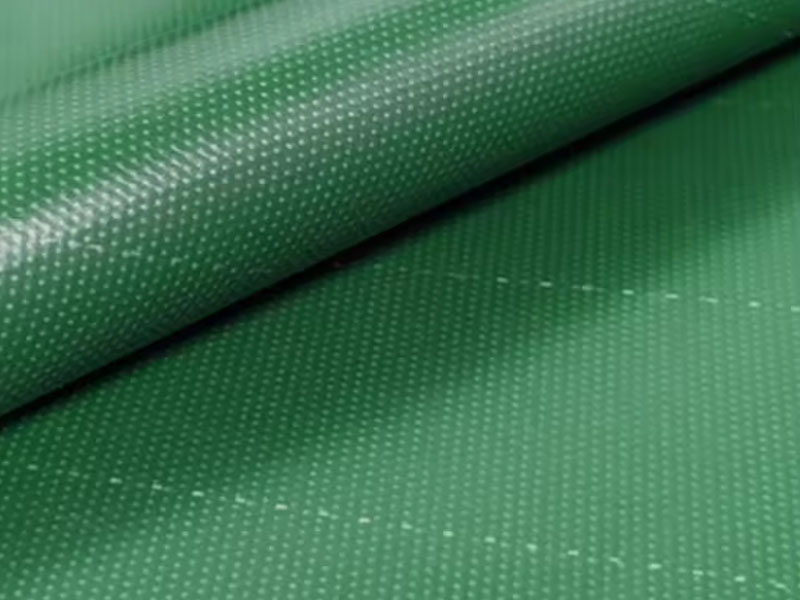
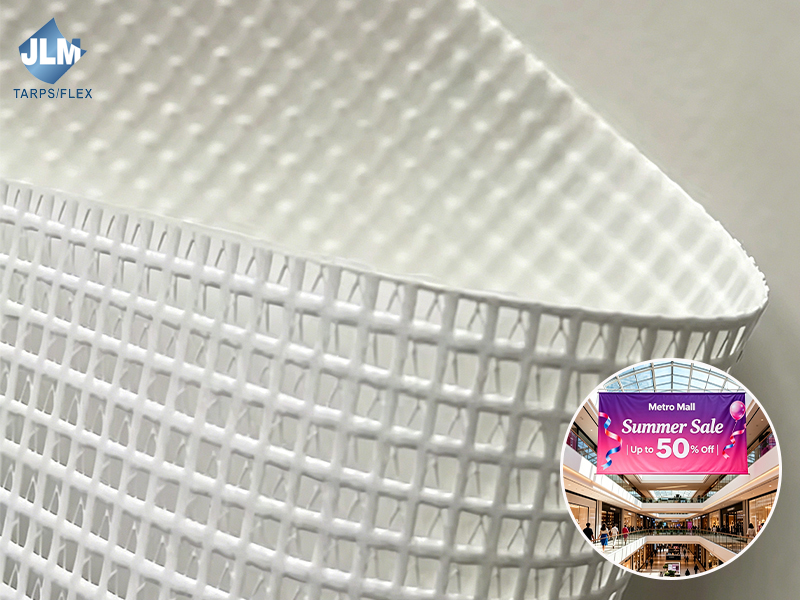
Vinyl-laminated tarpaulins take a different approach. Rather than chemically bonding PVC to the scrim through coating, the lamination process fuses pre-formed vinyl film to a polyester or polyethylene mesh using heat and pressure. The result is lighter, more flexible, and less expensive than knife-coated PVC — but also structurally weaker at the film-to-fabric interface over time. PVC laminated tarpaulin offering layered weather resistance occupies the middle ground between light poly tarps and fully coated heavy-duty PVC, making it a practical choice for mid-range applications where extreme durability is not the primary requirement.
The performance gap between the two constructions becomes most visible under sustained environmental stress. PVC-coated tarpaulins deployed in continuous outdoor industrial use are documented to maintain over 80% of their structural integrity and surface clarity after more than ten years of exposure — an outcome that reflects both the coating's UV stabilizer package and the mechanical reinforcement of the polyester scrim. Vinyl-laminated alternatives, particularly lighter grades, are more susceptible to delamination, surface fading, and brittleness when exposed to temperature cycling and prolonged UV radiation. The weight differential tells part of the story: vinyl laminated tarps typically run 650–900 GSM for mid-duty applications, while industrial PVC coated tarpaulins are commonly specified at 900–1,600 GSM or higher for demanding environments.
Where Each Material Belongs: Industrial vs. Light-Duty Applications
The clearest way to differentiate vinyl from PVC in practice is by matching each material to its appropriate load of environmental and mechanical stress.
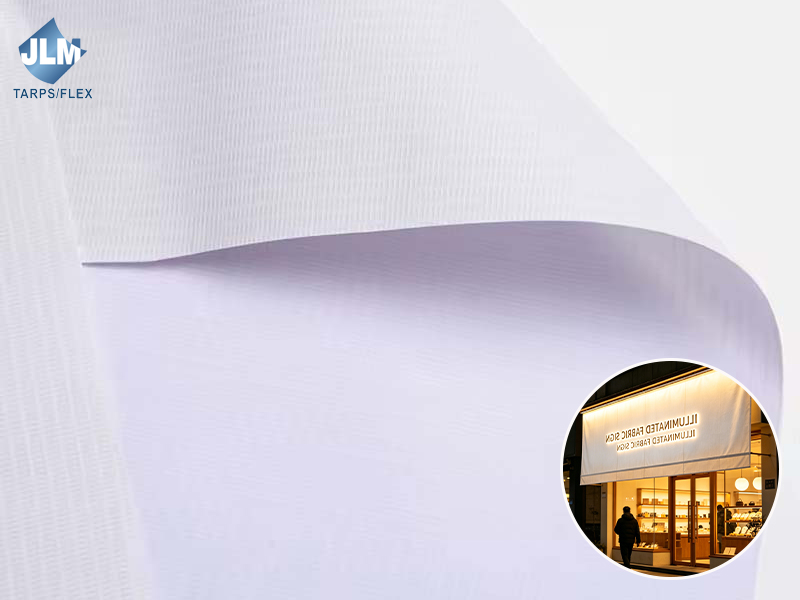
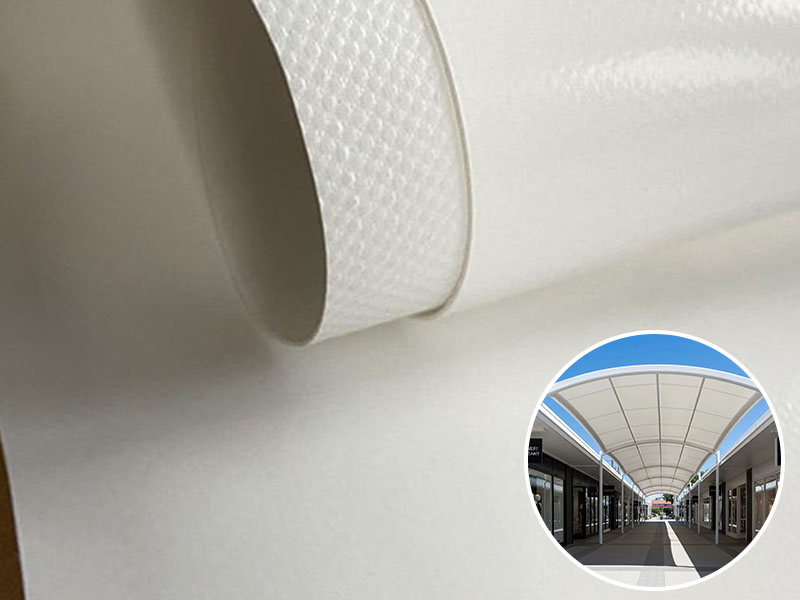
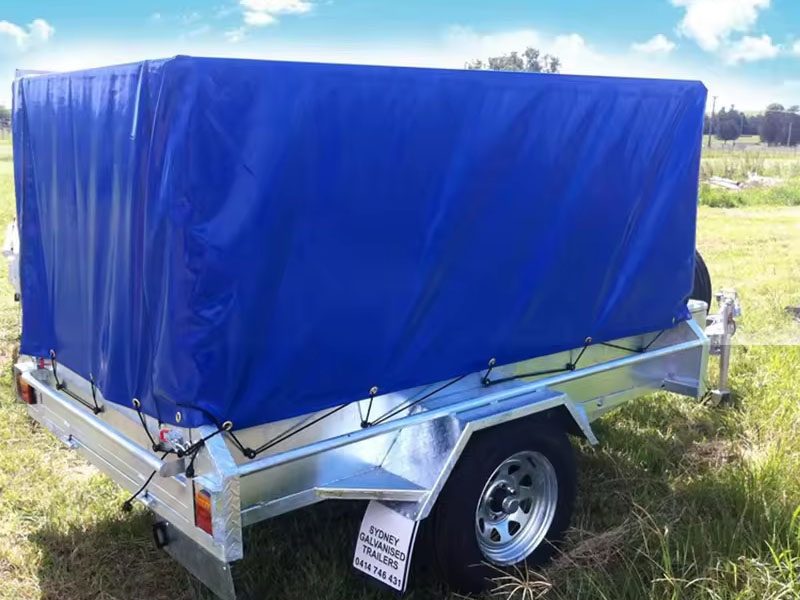
PVC-coated fabrics dominate applications where failure has real cost consequences: truck and trailer curtain systems, permanent tent and event structures, agricultural storage covers, construction site enclosures, and industrial machinery protection. Their combination of high tensile strength, chemical resistance, temperature range (typically rated from –30°C to +70°C), and long service life makes them the default specification wherever the covering is expected to perform reliably for years in outdoor or high-traffic conditions. Tent fabric engineered for long-term tensile structure use depends on exactly these properties — a structure that needs to remain taut, weatherproof, and dimensionally stable through multiple seasons cannot tolerate the delamination or stretch creep that lighter vinyl materials exhibit under sustained load.
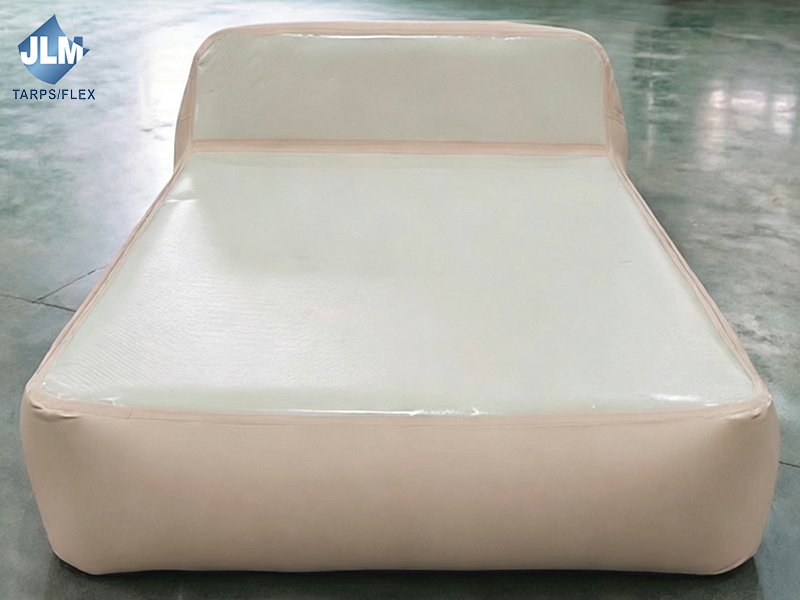
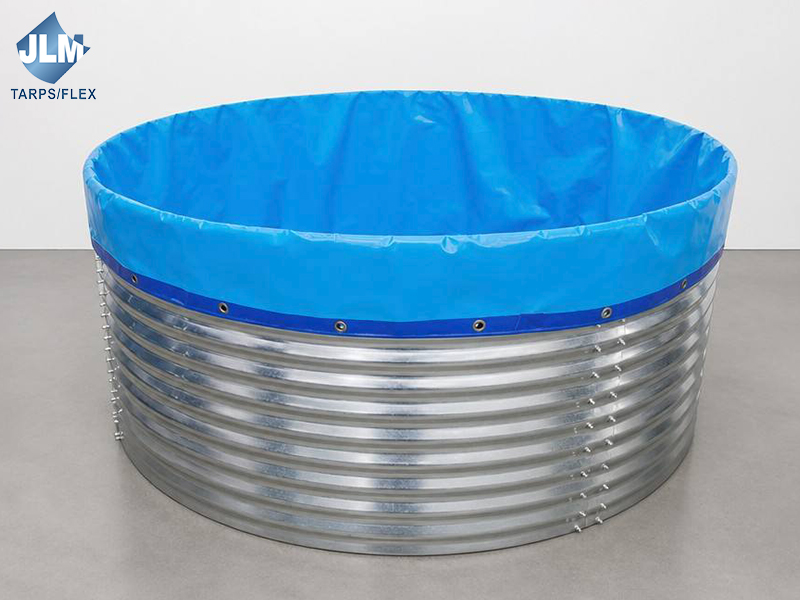
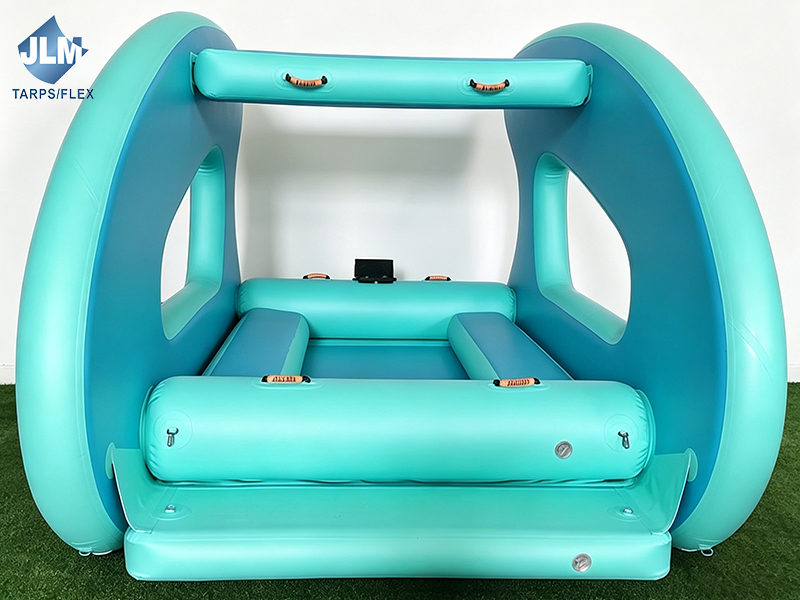
PVC also underpins applications that require airtight, pressure-resistant, or fluid-containment properties. Flexible PVC water tanks built to withstand continuous pressure rely on the material's impermeability and weld-seam integrity — properties that are a function of PVC's molecular density and its response to high-frequency welding processes. Similarly, drop stitch fabric for high-pressure inflatable applications uses PVC-coated constructions precisely because the coating must hold pressure differentials and survive repeated inflation cycles without fatigue failure.
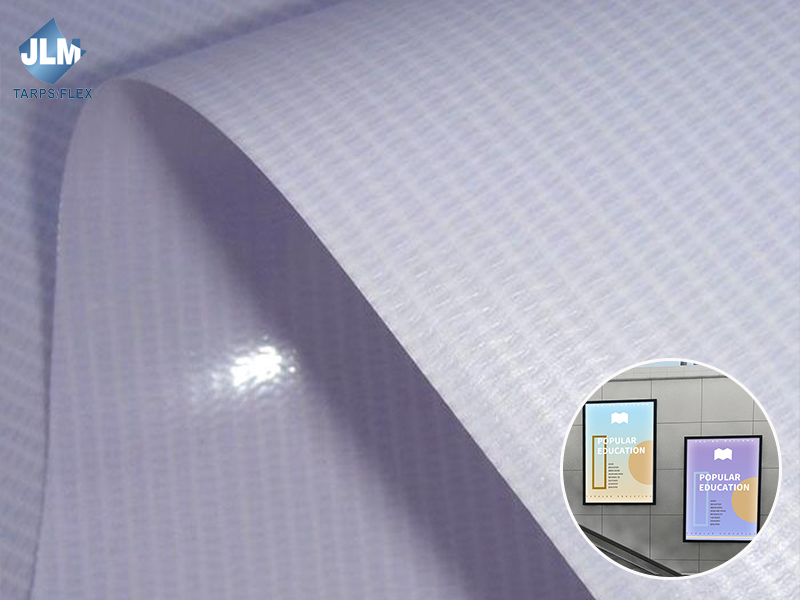
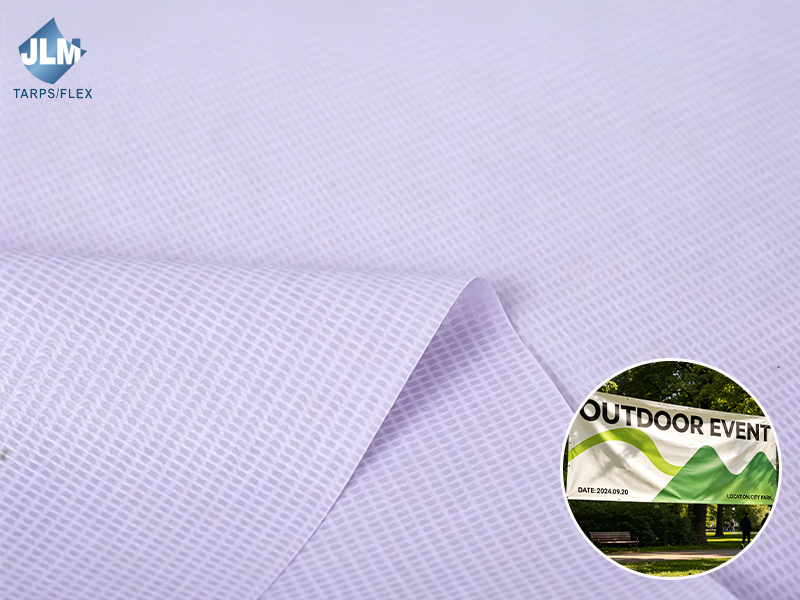
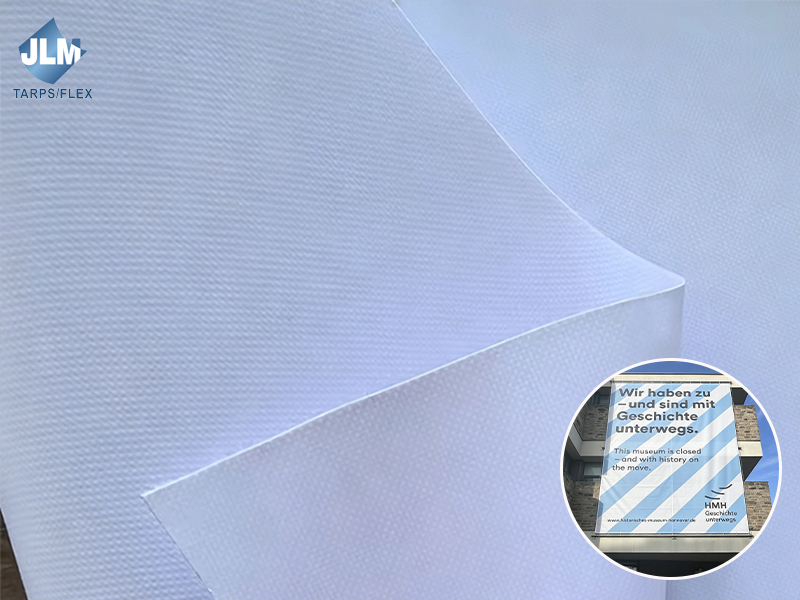
Vinyl-laminated and lighter vinyl-coated materials serve a different but legitimate set of needs. Promotional and display applications — outdoor signage, event banners, short-term canopies — benefit from vinyl's printability, light weight, and lower cost without requiring the structural performance of industrial PVC. PVC flex banners designed for high-quality print applications leverage the material's smooth surface, ink adhesion properties, and UV resistance to produce vivid, weather-tolerant graphics for a fraction of the cost of heavier industrial fabric. In these contexts, the lighter construction is not a compromise — it is the appropriate specification.
Making the Right Call: A Practical Selection Framework
The vinyl-versus-PVC question ultimately resolves into three variables that should drive any material specification decision: the duration of deployment, the severity of the environmental conditions, and the total cost of ownership over the expected service life.
For short-term or seasonal deployments in moderate conditions — temporary event shelters, seasonal agricultural covers, display and promotional materials — lighter vinyl constructions deliver adequate performance at a lower upfront cost. The material will handle the task without the weight, handling complexity, or price premium of heavy-duty PVC, and the shorter replacement cycle is economically acceptable.
For permanent or long-duration installations, outdoor structures exposed to wind loading, UV radiation, chemical splash, or frequent mechanical stress, the calculus shifts decisively toward PVC-coated construction. The higher upfront cost is typically recovered within the first replacement cycle of a lighter alternative: a PVC tarpaulin rated for 8–12 years of continuous industrial use will outperform three or four generations of lighter vinyl covering across the same timeframe, with lower labor cost for installation and removal. When specifying across a full product range — from coated and laminated tarpaulins to tensile membranes, inflatable fabrics, and flexible containment — the most important step is confirming whether the material specification calls for PVC-coated polyester, vinyl-laminated construction, or a lighter vinyl-only product, rather than accepting any of those terms as interchangeable.
Vinyl and PVC share a common chemical ancestry, but they are not the same product. In markets where material performance is the margin between a project succeeding and a covering failing at the worst possible moment, that distinction is worth getting right before the order is placed.