
 English
 русский
 Français
 Español
Content
- 1 The Short Answer: Canvas, Vinyl, and PVC Are Not the Same
- 2 What Are Canvas Sheets for Tents Made Of?
- 3 Is Vinyl and PVC the Same Material?
- 4 Canvas vs. Vinyl/PVC: How They Compare for Tent Use
- 5 When to Choose Canvas Sheets for Your Tent
- 6 When to Choose Vinyl or PVC Tent Sheets
- 7 Key Specifications to Check When Buying Canvas Tent Sheets
- 8 Caring for Canvas Tent Sheets to Maximize Lifespan
- 9 Canvas and Vinyl/PVC Tent Sheet Price Ranges
The Short Answer: Canvas, Vinyl, and PVC Are Not the Same
Canvas sheets for tents are made from woven cotton or cotton-polyester fabric, valued for breathability, natural feel, and durability under extended use. Vinyl and PVC, on the other hand, are closely related synthetic materials — vinyl is the common name for PVC (polyvinyl chloride) in most commercial contexts — but they are not identical to canvas and serve different purposes in shelter and tarp applications.
In practice, "vinyl tarp" and "PVC tarp" are often used interchangeably by manufacturers, and for most buyers they refer to the same product category: a coated or laminated synthetic sheet. Canvas, by contrast, is a woven textile that behaves very differently in terms of breathability, weight, and long-term performance. Understanding these distinctions helps you choose the right material for your tent, canopy, or outdoor shelter.

What Are Canvas Sheets for Tents Made Of?
Traditional tent canvas is woven from 100% cotton, though most modern canvas tent sheets use a cotton-polyester blend — typically 60% cotton / 40% polyester or 65/35 — to reduce weight and improve mold resistance while preserving the natural properties of cotton.
Canvas tent fabric is measured in ounces per square yard (oz/yd²) or grams per square meter (GSM). Common weight ranges include:
- 10–12 oz (340–400 GSM): Lightweight canvas suitable for warm-weather camping and short-term use.
- 13–15 oz (440–510 GSM): Mid-weight canvas; the most popular range for general-purpose wall tents and outfitter tents.
- 16–18 oz (540–610 GSM): Heavy-duty canvas used in expedition shelters, military canvas, and permanent-style glamping tents.
Canvas tent sheets are typically treated with one or more of the following finishes to enhance performance in outdoor conditions:
- Water repellency treatment (DWR): A durable water-repellent coating applied to the surface so water beads off rather than soaking in.
- Mildew resistance: Chemical treatment or fiber blending to inhibit mold and mildew growth during storage and use.
- Fire retardancy: Many commercial and event canvas sheets carry a flame-retardant treatment to comply with CPAI-84 (US) or BS 7837 (UK) standards.
Is Vinyl and PVC the Same Material?
Technically, vinyl is a broad term for a family of ethylene-based plastics, of which PVC (polyvinyl chloride) is by far the most common. In everyday usage — including in the tarp, banner, and shelter industries — "vinyl" almost always refers to PVC. So when a manufacturer advertises a "vinyl tarpaulin" and a "PVC tarpaulin," they are almost certainly describing the same base material.
The nuance worth knowing is that not all vinyl products are identical, even when PVC is the base. Key variables include:
- Plasticizer content: PVC is rigid in its raw form. Plasticizers (typically phthalates or newer alternatives) are added to make it flexible. The type and quantity of plasticizer affects cold-crack resistance, UV stability, and long-term durability.
- Laminated vs. coated construction: Most heavy-duty vinyl tarps for tents use a polyester scrim sandwiched between two PVC layers (laminated), while lighter-duty products may use a single-side coated construction.
- UV stabilizers: Quality PVC/vinyl sheets for outdoor use contain UV inhibitors. Budget-grade products may omit these, leading to brittleness and cracking within 1–2 seasons.
For practical purposes: if a product is sold as a vinyl tent sheet or PVC tent sheet, it can be treated as the same category, but always check the GSM weight and whether it uses a reinforced scrim before purchase — these factors matter far more than the vinyl/PVC labeling distinction.
Canvas vs. Vinyl/PVC: How They Compare for Tent Use
The choice between canvas and vinyl/PVC tent sheets comes down to several performance factors. The table below summarizes the most important differences:
| Property | Cotton Canvas | Poly-Cotton Canvas | Vinyl / PVC |
|---|---|---|---|
| Breathability | Excellent | Good | None |
| Waterproofness | Water-resistant (treated) | Water-resistant (treated) | Fully waterproof |
| Typical weight | 340–610 GSM | 280–500 GSM | 300–900 GSM |
| UV resistance | Moderate | Moderate–Good | Good (if UV-stabilized) |
| Condensation inside | Low (absorbs moisture) | Low–Moderate | High (non-breathable) |
| Mold risk | Higher if stored wet | Moderate | Low |
| Lifespan (well maintained) | 10–20+ years | 8–15 years | 5–10 years |
| Repairability | Easy (sew or patch) | Easy | Moderate (heat weld or tape) |
| Relative cost | Higher | Medium–High | Lower–Medium |
When to Choose Canvas Sheets for Your Tent
Canvas remains the preferred material for extended stays and all-season camping where comfort inside the tent matters as much as weather protection. Here is when canvas makes the strongest case:
Long-Term or Semi-Permanent Shelters
Canvas wall tents, safari tents, and glamping structures are typically kept erected for weeks or months at a time. In these settings, breathability is critical — canvas allows moisture vapor from occupants to escape, significantly reducing condensation drip on interior surfaces. A quality 15 oz poly-cotton canvas tent can last well over a decade in seasonal use with proper care.
Hot-Weather or High-Humidity Conditions
In tropical or humid environments, PVC tents create a greenhouse-like interior that rapidly becomes uncomfortable. Canvas, by contrast, moderates internal temperature through moisture exchange — users consistently report interior temperatures 5–10°C cooler than equivalent synthetic shelters in hot sun.
Wood Stove Compatibility
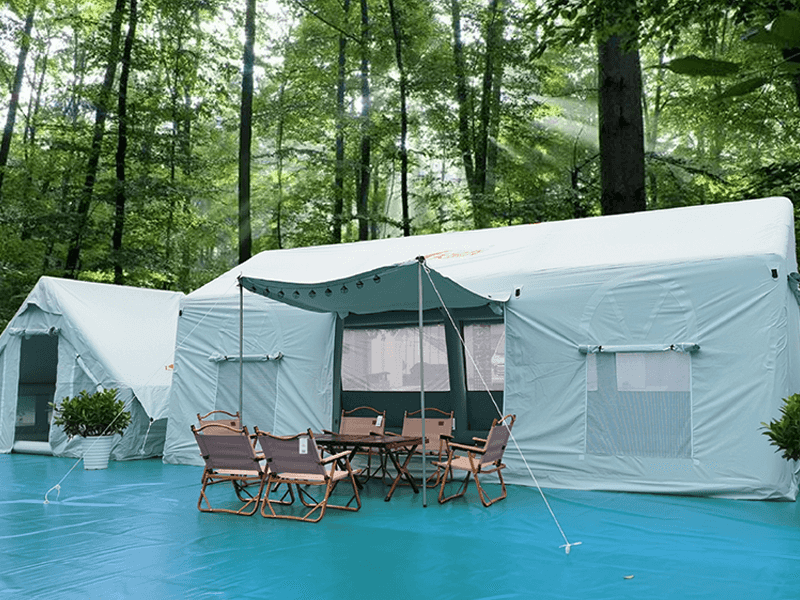
Many canvas hot tents are designed with a stove jack — a reinforced opening for a stovepipe — for use with wood-burning stoves during cold-weather camping. Canvas is far more compatible with this use than PVC, which cannot safely accommodate the stovepipe proximity and will emit toxic fumes if it ignites.
When to Choose Vinyl or PVC Tent Sheets
Vinyl and PVC sheets have clear advantages in specific scenarios and should not be dismissed as simply a cheaper alternative to canvas:
- Short-duration events and festivals: For temporary shelters, market stalls, or event canopies erected for a few days, vinyl's full waterproofness and easy cleaning are practical advantages over canvas.
- High-rainfall environments: In very wet climates where rain is near-constant, a fully waterproof PVC laminated sheet outperforms water-resistant canvas, which can eventually wet out during prolonged heavy downpours if the DWR treatment has degraded.
- Ground sheets and footprint liners: PVC and vinyl are the correct choice for tent groundsheets, where direct contact with soil and water requires a fully impermeable barrier. Canvas is never used for ground contact.
- Budget constraints: A 500 GSM PVC laminated tarp costs roughly 30–50% less than an equivalent-weight canvas tarp and performs adequately for casual or infrequent use.
- Easy storage without drying: Unlike canvas, vinyl/PVC can be folded and packed damp without risk of mildew damage — an important advantage for users who cannot always dry their shelter before packing up.
Key Specifications to Check When Buying Canvas Tent Sheets
Not all canvas sheets marketed for tents are equivalent in quality. These are the specifications that most directly affect real-world performance:
Fabric Weight (GSM or oz/yd²)
Heavier canvas is more durable and better at managing moisture, but adds significant weight and pack volume. For backpacking or portability, 10–12 oz (340–400 GSM) is more practical. For base camps, outfitter tents, or glamping, 13–16 oz (440–540 GSM) is the standard.
Thread Count and Weave Type
A tighter weave (higher thread count) improves wind resistance and slows water penetration. Duck canvas uses a plain weave and is the most common tent canvas. Army duck and numbered duck refer to specific US military weave standards — No. 8 duck (8.80 oz) and No. 10 duck (10 oz) are frequently referenced in tent specifications.
Treatment and Certification
Look for canvas certified to CPAI-84 (US flame resistance standard for camping tentage) or, in Europe, EN 13773. Mildew resistance is often listed as a treatment additive (e.g., "Mildewcide treated") rather than an inherent property, so verify this claim with the supplier if long-term storage between seasons is important to you.
Seam and Reinforcement Construction
Quality canvas tent sheets use double-stitched or French seams at stress points, with reinforced grommet patches at all tie-down locations. Grommets should be solid brass or stainless steel — aluminum grommets corrode rapidly in outdoor conditions and are a reliable indicator of lower build quality.
Caring for Canvas Tent Sheets to Maximize Lifespan
The most common cause of premature canvas failure is improper storage and drying, not wear or UV damage. Follow these practices to protect your investment:
- Season new canvas before first use. Wet the fabric thoroughly, allow it to dry, and repeat 2–3 times. This causes the cotton fibers to swell and close the needle holes from stitching, significantly improving water resistance without any chemical treatment.
- Always dry completely before storage. Canvas stored at even 15% moisture content will develop mildew within weeks. If you must pack damp, re-dry within 48 hours at the latest.
- Store loosely rolled or folded, not compressed. Prolonged compression weakens fibers at fold lines. Store in a breathable cotton or mesh bag — never in an airtight plastic bag or container.
- Re-treat DWR coating every 2–3 seasons. Wash-in or spray-on DWR products (such as Nikwax Cotton Proof or Grangers Cotton Repel) restore water repellency after UV and wash exposure.
- Repair small tears promptly. A 10 mm tear in canvas can become a 300 mm rip in a single windy night. Iron-on canvas repair patches or hand-stitched cotton patches stop damage from propagating.
Canvas and Vinyl/PVC Tent Sheet Price Ranges
Pricing varies by fabric weight, size, and quality tier. The following table gives realistic reference ranges for common tent sheet formats:
| Product Type | Weight / Spec | Typical Size | Price Range (USD) |
|---|---|---|---|
| Cotton canvas tarp sheet | 12 oz (400 GSM) | 10 × 12 ft | $80–$150 |
| Poly-cotton canvas tent wall | 14 oz (475 GSM) | 12 × 14 ft | $120–$250 |
| Heavy canvas outfitter sheet | 16–18 oz (540–610 GSM) | 16 × 20 ft | $300–$600 |
| PVC laminated vinyl tarp | 500 GSM scrim-reinforced | 10 × 12 ft | $40–$90 |
| Heavy-duty vinyl event canopy | 650–900 GSM | 20 × 20 ft | $150–$400 |