
 English
 русский
 Français
 Español
The Short Answer: PVC Is a Type of Vinyl
Ask ten people whether vinyl and PVC are the same thing, and you'll likely get ten different answers. The confusion is understandable — the two terms appear side by side on product labels, in supplier catalogs, and across entire industries. Here is the clearest way to think about it: PVC is a specific type of vinyl, but vinyl is not always PVC.
Vinyl is a broad category. PVC — polyvinyl chloride — is one member of that category, and by far the most commercially dominant one. Understanding this parent-child relationship is the first step toward making smarter material decisions, especially when selecting industrial fabrics, tarpaulins, or coated textiles.
Content
What Is Vinyl, Exactly?
In chemistry, "vinyl" refers to the vinyl group — an ethylene-derived radical (CH₂=CH−) that forms the backbone of a wide family of synthetic polymers. Any polymer built around this structure can technically be called a vinyl material. That umbrella includes polyvinyl chloride (PVC), polyvinyl acetate (PVA), polyvinyl alcohol (PVOH), and several others.
In everyday language, though, "vinyl" has drifted far from its chemical roots. Consumers and manufacturers use it as a catch-all term for flexible, durable synthetic sheeting — the kind used in flooring, upholstery, signage, and protective covers. This linguistic shortcut is what fuels most of the confusion with PVC.
Vinyl materials share a few general traits: they resist moisture, tolerate moderate abrasion, and can be formulated across a wide range of flexibility levels. But their specific performance depends entirely on which vinyl compound is involved and what additives have been blended in during manufacturing.
What Is PVC and How Is It Made?
PVC stands for polyvinyl chloride — a thermoplastic polymer produced by polymerizing vinyl chloride monomer (VCM). The VCM itself is synthesized by combining ethylene (derived from oil) with chlorine (produced by electrolyzing salt water). Once polymerized, the resulting PVC resin is a white, rigid powder with virtually no practical use on its own. What makes PVC versatile is what happens next: manufacturers blend in a carefully chosen mix of additives to engineer the final material's properties. You can learn more about this polymerization process and PVC's chemical foundation from this overview of PVC polymer chemistry and production.
Those additives typically include:
- Plasticizers — soften the rigid resin into a flexible film (flexible PVC) or leave it stiff for pipes and window profiles (rigid PVC/PVC-U)
- Stabilizers — prevent thermal and UV degradation during processing and end use
- Impact modifiers — improve resistance to cracking and puncture
- UV inhibitors — extend outdoor service life by blocking solar radiation
- Colorants and flame retardants — tailor appearance and fire performance
The additive formula is where real quality differences emerge between manufacturers, even when two products are both called "PVC." A premium industrial-grade PVC compound can vastly outperform a basic formulation in the same product category.
Key Differences Between Vinyl and PVC
When people compare "vinyl" and "PVC" as if they were two separate materials, they are usually contrasting a broad, loosely defined product category against a chemically specific one. With that framing in mind, here are the practical differences that matter most:
| Property | Vinyl (general) | PVC (polyvinyl chloride) |
|---|---|---|
| Chemical definition | Broad family of ethylene-based polymers | Specific polymer: polyvinyl chloride |
| Flexibility | Varies widely by compound | Rigid or flexible depending on plasticizer content |
| Appearance | Often smoother, glossier finish | Can range from soft film to hard board |
| Cost | Generally mid-to-high range | One of the most cost-effective options |
| Industrial durability | Good, varies by formulation | Excellent with proper additives |
| Common applications | Signage, upholstery, décor, flooring | Pipes, tarpaulins, banners, water tanks, hoses |
Vinyl tends to appear smoother on the surface, while PVC compounds — especially when reinforced with a polyester scrim — produce a tougher, more structured material. In terms of cost, PVC resin is one of the most affordable base polymers available, which is a core reason it dominates industrial fabric and construction material applications.
Why Are Vinyl and PVC Used Interchangeably?
The interchangeable use of "vinyl" and "PVC" has a practical origin: in many product categories, PVC is the only vinyl compound actually used. Vinyl fencing, for example, is almost exclusively made from PVC. Vinyl flooring, vinyl records, and vinyl tarpaulins all use PVC as their primary material. So when manufacturers label something "vinyl," they mean PVC — and over decades, the shorthand became standard industry language.
This convention causes no real harm in consumer settings. But for procurement managers, engineers, or buyers sourcing industrial materials at scale, assuming vinyl always means PVC can lead to specification errors. Always verify the actual material compound and additive formula with the manufacturer when performance requirements are critical.
Vinyl and PVC in Industrial Fabrics and Tarpaulins
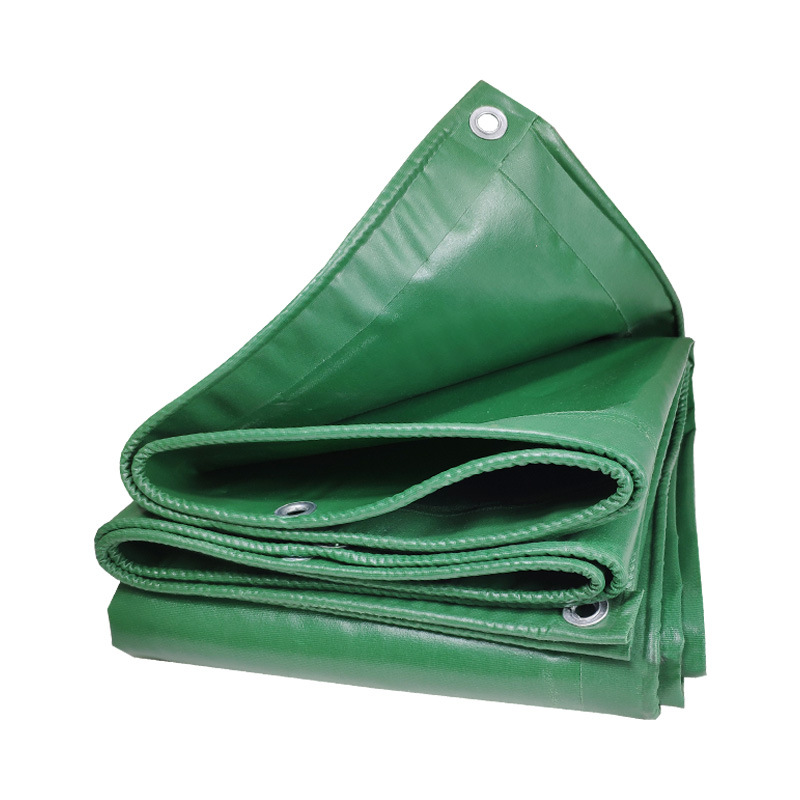
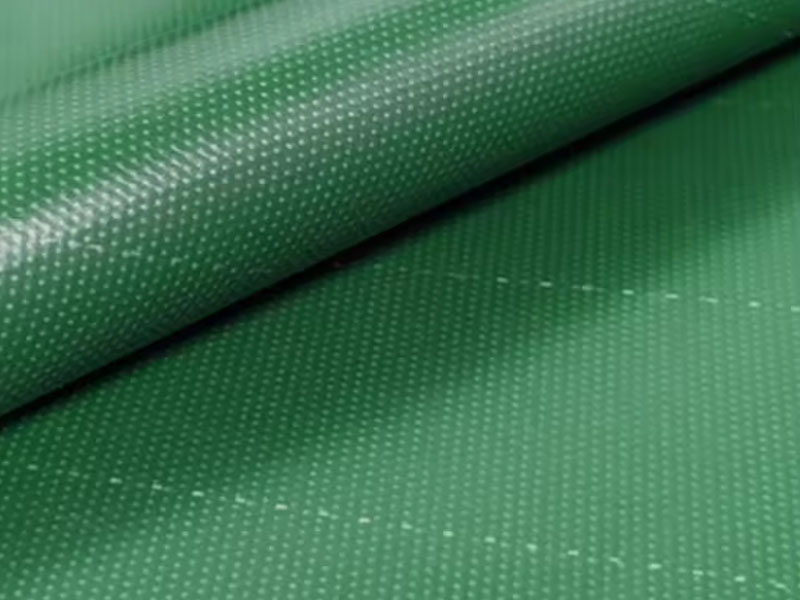
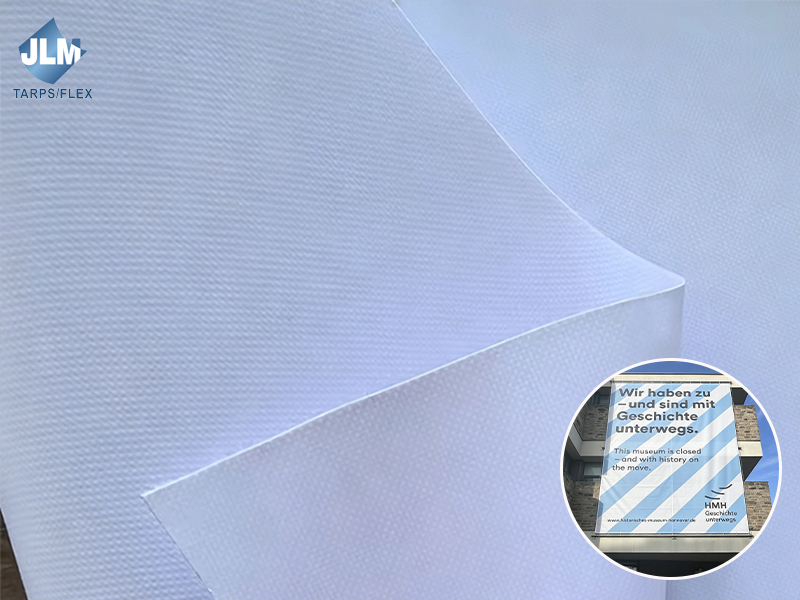
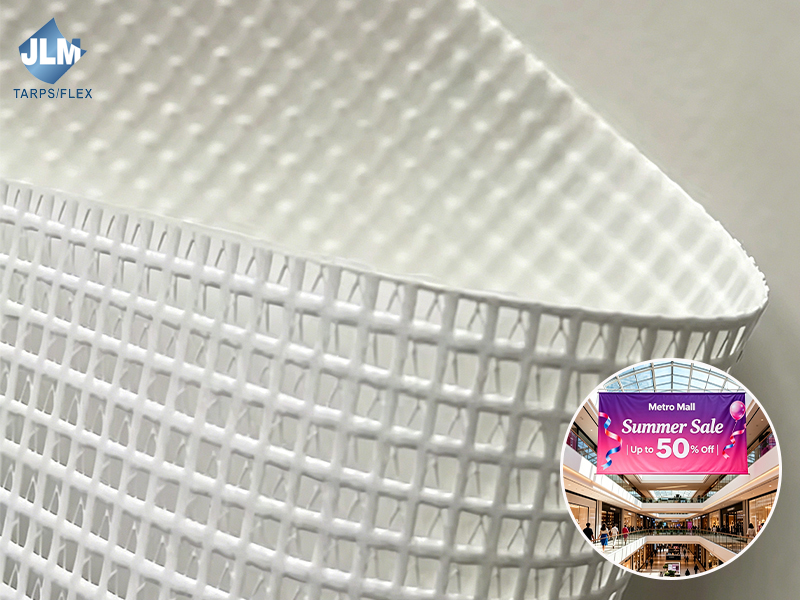
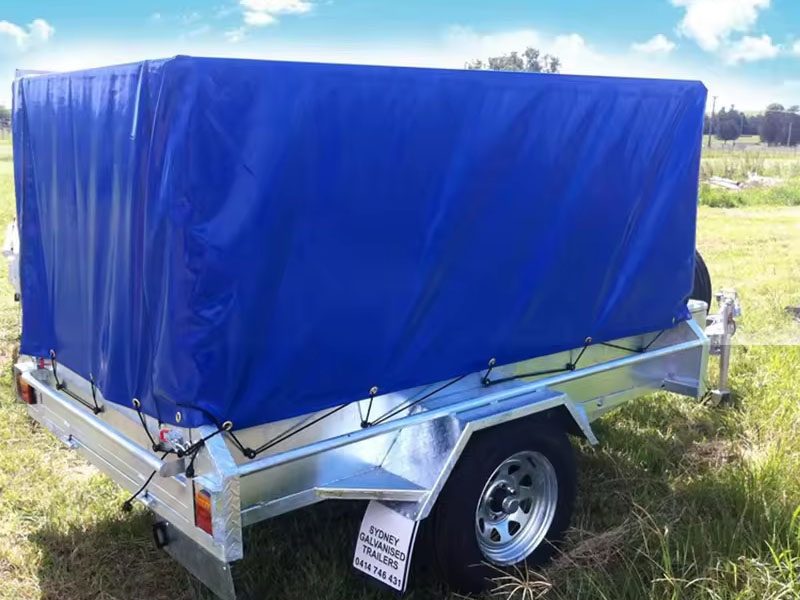
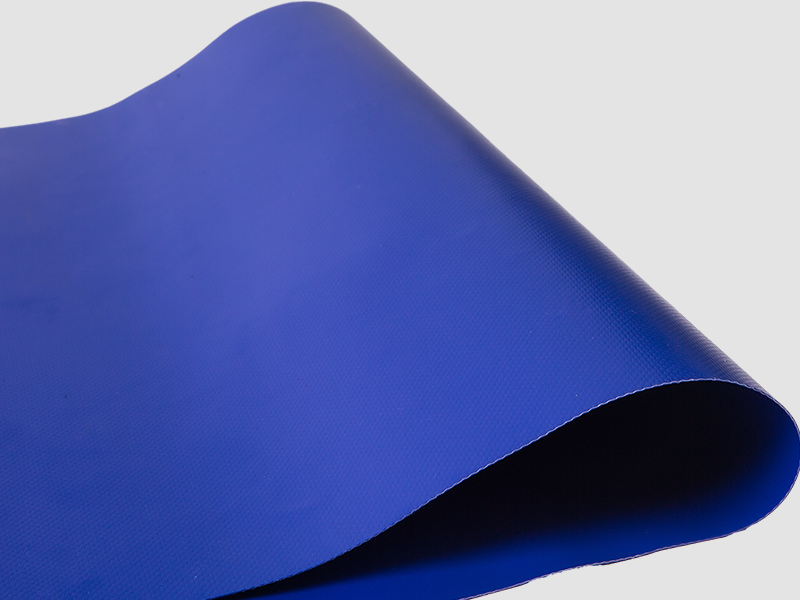
Nowhere is the vinyl-vs-PVC question more consequential than in industrial textiles. When you encounter a "vinyl tarp" in a supplier catalog, it is almost certainly a PVC-coated or PVC-laminated fabric — a woven polyester or polyamide base cloth with PVC compound applied to one or both surfaces. The PVC layer is what delivers the material's core performance: waterproofing, tear resistance, chemical resistance, and UV stability.
The quality of that PVC layer varies significantly. A tarpaulin intended for short-term agricultural coverage may use a thin, lightly plasticized PVC coating with minimal UV inhibitors. A heavy-duty cover for long-term open-air freight or construction applications requires a dense compound with impact modifiers, flame retardants, and strong UV stabilizers built in. Both are technically "PVC vinyl tarps," but they are not remotely equivalent in the field.
For applications requiring reliable, long-lasting protection, explore heavy-duty waterproof covering fabrics engineered with industrial-grade PVC formulations. If your application involves direct surface exposure or rigid outdoor use, PVC coated tarpaulin for industrial use offers the structured protection that lighter vinyl products cannot match.
How to Choose the Right Material for Your Needs
The vinyl-vs-PVC distinction matters most at the decision-making stage. Here is a practical framework for getting it right:
- Ask for the compound specification — not just the product name. A reputable manufacturer will confirm whether the material is PVC, what plasticizer system is used, and what additives are included for UV or flame resistance.
- Match the formulation to the environment — outdoor, long-term applications demand stabilizers and UV inhibitors. Controlled indoor environments can use simpler, less expensive compounds.
- Consider weight and construction — gsm (grams per square meter) and denier count of the base fabric are reliable quality indicators for coated and laminated tarpaulins.
- Check certifications — fire-retardant ratings (such as EN 13501 in Europe) and tensile strength tests tell you far more about real-world performance than the word "vinyl" or "PVC" on a product label alone.
For a balanced breakdown of the trade-offs specific to outdoor covers, the pros and cons of PVC vinyl tarps is worth reading before you finalize any bulk order. And if you are evaluating long-term value, the analysis of how long vinyl tarps last in real conditions provides field-tested context that product specs alone cannot capture.
The bottom line is practical: whether the label says "vinyl" or "PVC," what ultimately determines performance is the specific formulation behind the product. Ask the right questions, and you'll get the right material every time.