
 English
 русский
 Français
 Español
Across construction sites, freight yards, agricultural fields, and tensile structures worldwide, one material keeps showing up as the waterproofing solution of choice: PVC fabric. That consistency isn't coincidence. According to industry analysis from market researchers tracking the waterproof PVC fabric sector, roughly 60% of total demand for waterproof fabrics has historically been driven by the outdoor and industrial segments — markets where failure is expensive and performance requirements are non-negotiable. PVC earns that trust for specific, measurable reasons. Understanding them helps buyers make better procurement decisions and avoid costly mismatches between material and application.
Content
Why PVC Remains the Default Choice for Waterproof Applications
PVC — polyvinyl chloride — has been a cornerstone of industrial waterproofing for decades, and its market position continues to strengthen as infrastructure investment grows globally. The material combines a unique set of properties that few alternatives can match at the same price point: genuine impermeability, structural strength, UV resistance, and chemical inertness, all in a flexible, lightweight form factor that can be cut, welded, and customized at scale.
For procurement teams sourcing covering materials for transport fleets, project managers specifying roofing or tensile structures, or agricultural operators needing reliable water storage, PVC waterproof fabric offers predictable performance across a wide range of operating conditions. That predictability is, in many ways, the product. When a tarpaulin or membrane fails in the field, the downstream costs — damaged cargo, structural repair, crop loss — far exceed the savings from choosing a cheaper material. PVC's track record keeps it at the top of specification lists across industries.
The Science Behind PVC's Waterproof Performance
PVC's water resistance is not a coating applied as an afterthought — it is built into the material's molecular structure. Polyvinyl chloride is a non-porous polymer, meaning water molecules cannot permeate through it under normal conditions. Unlike natural fibers or open-weave synthetics, PVC forms a continuous barrier with no capillary pathways for moisture ingress. This is why PVC performs equally well under sustained rainfall, standing water, and high-humidity environments without degradation of the base material.
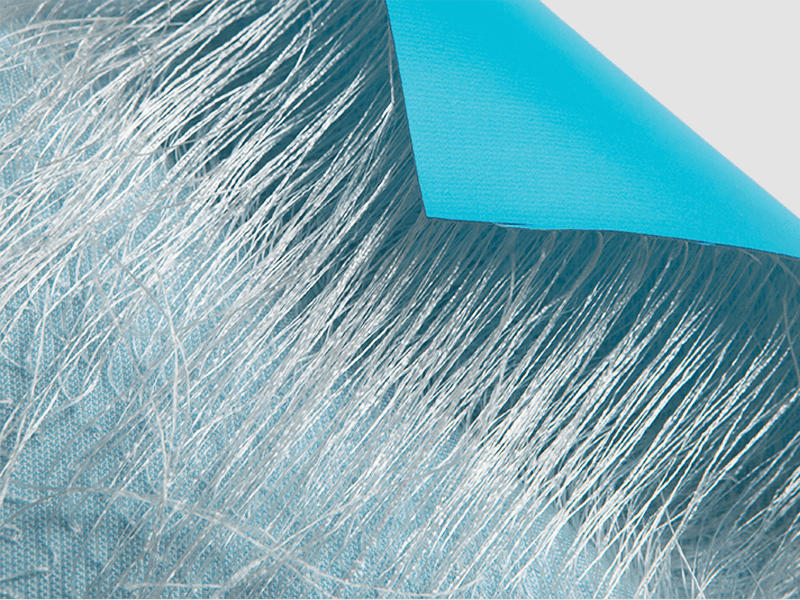
In fabric form, PVC waterproof material is manufactured by applying PVC compound to a woven polyester or nylon base fabric through either a coating or lamination process. The result is a composite structure where the textile substrate provides tensile strength and dimensional stability, while the PVC layer delivers waterproofing, UV resistance, and surface durability. Key performance attributes include:
- Zero water absorption — the PVC layer prevents moisture from reaching the base fabric, eliminating the swelling, mold growth, and fiber degradation that affect untreated textiles over time.
- UV resistance — stabilizers and pigments incorporated into the PVC compound protect against ultraviolet degradation, preventing the brittleness and cracking that cause premature failure in outdoor applications.
- Chemical resistance — PVC resists damage from dilute acids, alkalis, oils, and many industrial chemicals, making it suitable for environments where other materials would deteriorate rapidly.
- Thermal stability — within normal operating ranges, PVC waterproof fabric maintains flexibility and integrity across a broad temperature spectrum, from cold storage environments to sun-exposed outdoor installations.
These properties are not independent of each other — they work together to give PVC waterproof fabric its characteristic long service life under demanding conditions.
Where PVC Waterproof Fabric Is Used Across Industries
The versatility of PVC waterproof material is one of its most commercially significant characteristics. The same fundamental material — adjusted in weight, finish, and formulation — serves highly different end-use requirements across multiple sectors.
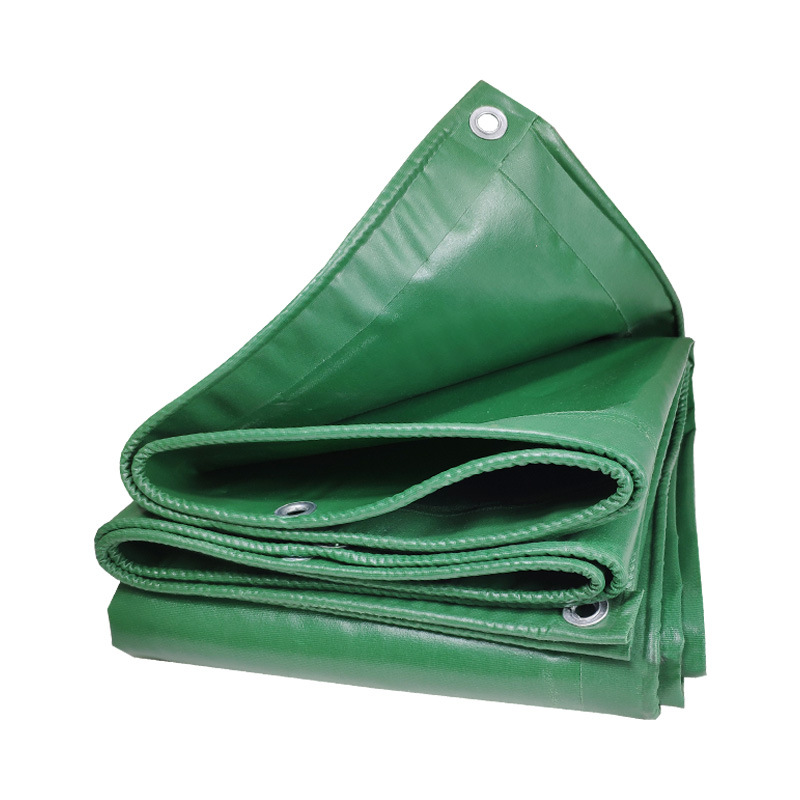
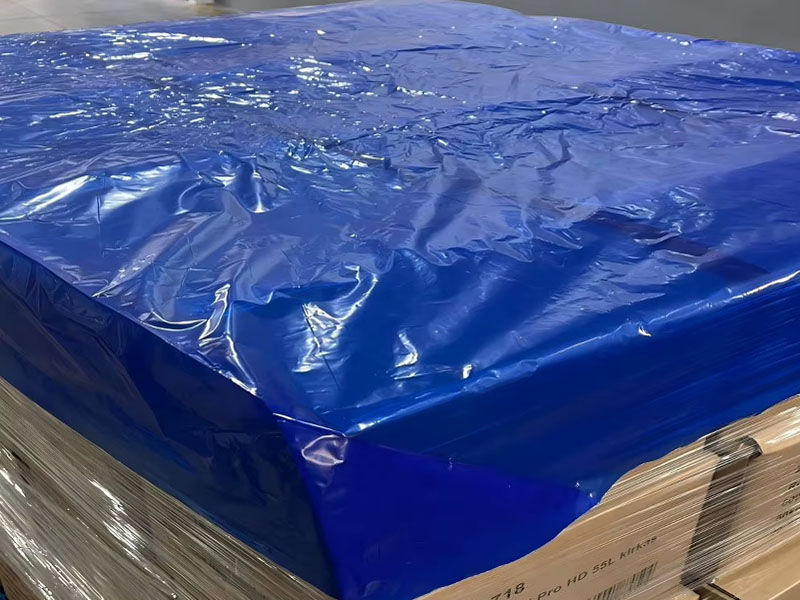
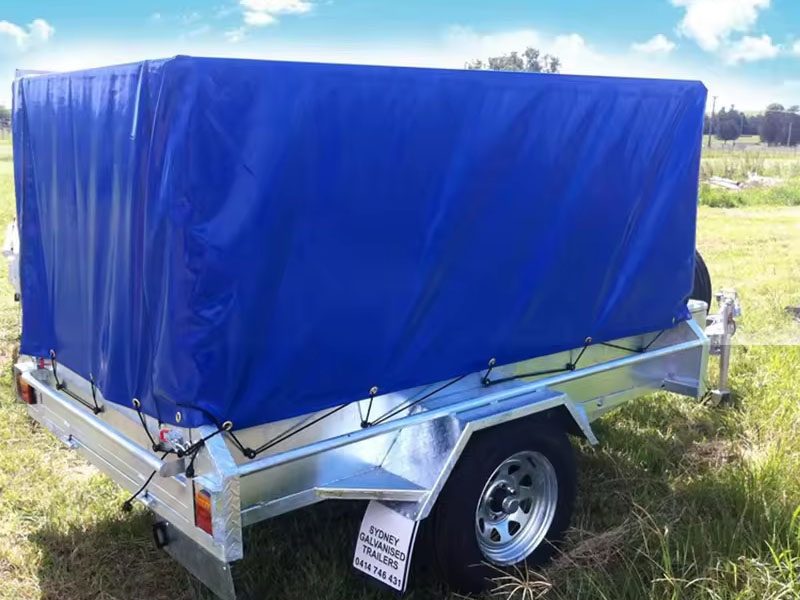
Transportation and logistics represent one of the largest application segments. Freight operators rely on PVC tarpaulin fabrics for heavy-duty covering of open trucks, flatbed trailers, and rail cars. These applications demand materials that can withstand wind loading, repeated folding and unfolding, and exposure to road salt and diesel exhaust without degrading. High-denier, heavy-weight PVC tarpaulins with reinforced edges and heat-welded seams are the standard specification for this segment.
Agriculture and water management have adopted PVC waterproof fabric in a different form: collapsible storage systems. Flexible PVC water tanks for agriculture and emergency storage have largely replaced rigid fixed tanks in remote irrigation, firefighting reserves, and disaster relief operations because they can be transported flat, deployed rapidly, and relocated without permanent infrastructure. The waterproof integrity of PVC in these tanks is critical — any permeability would result in loss of stored water over time, undermining the entire purpose of the system.
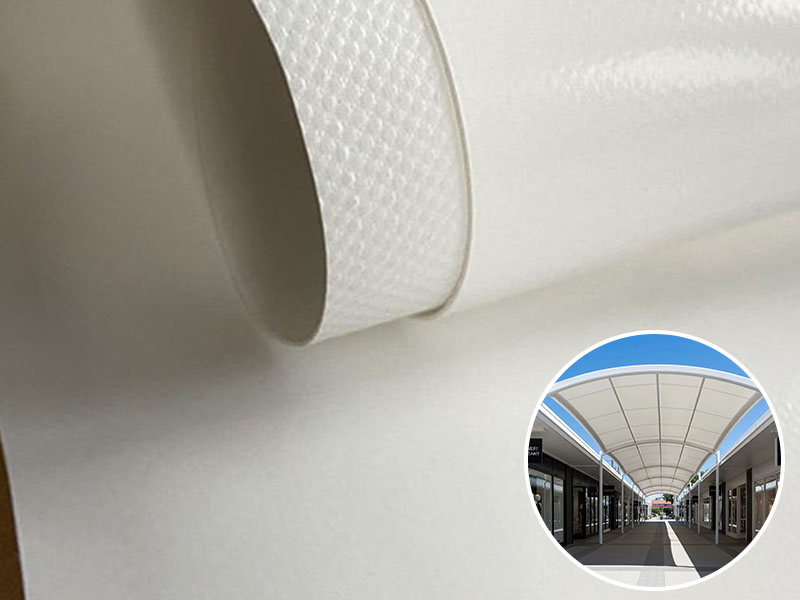
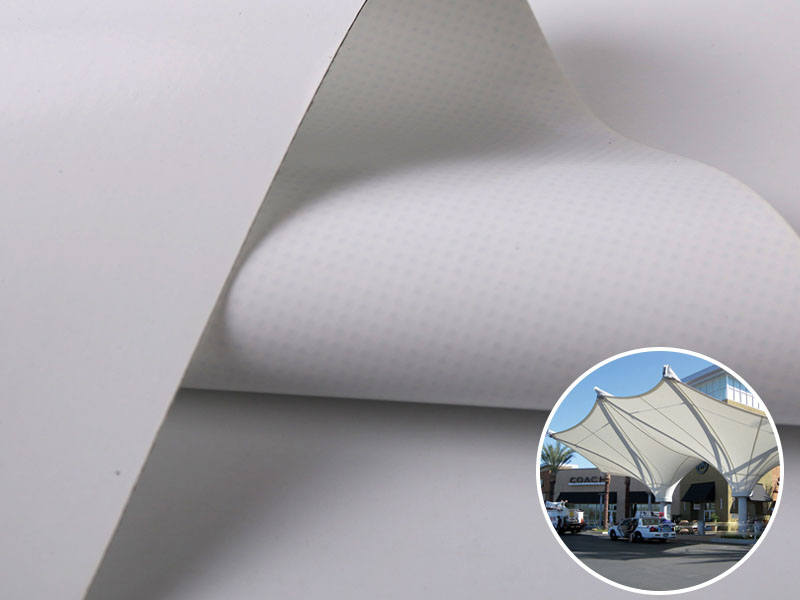
Architecture and tensile structures represent a technically demanding application where PVC waterproof fabric serves simultaneously as a structural and enclosure material. PVC tensile fabric for architectural membrane structures must combine waterproofing with precise mechanical properties — controlled elongation, high tear resistance, and weld strength — to perform reliably in permanent or semi-permanent installations like canopies, shade structures, and exhibition pavilions.
Industrial and construction covering round out the major application segments, where PVC tarpaulins protect equipment, materials, and structures from weather during storage, transport, and construction phases.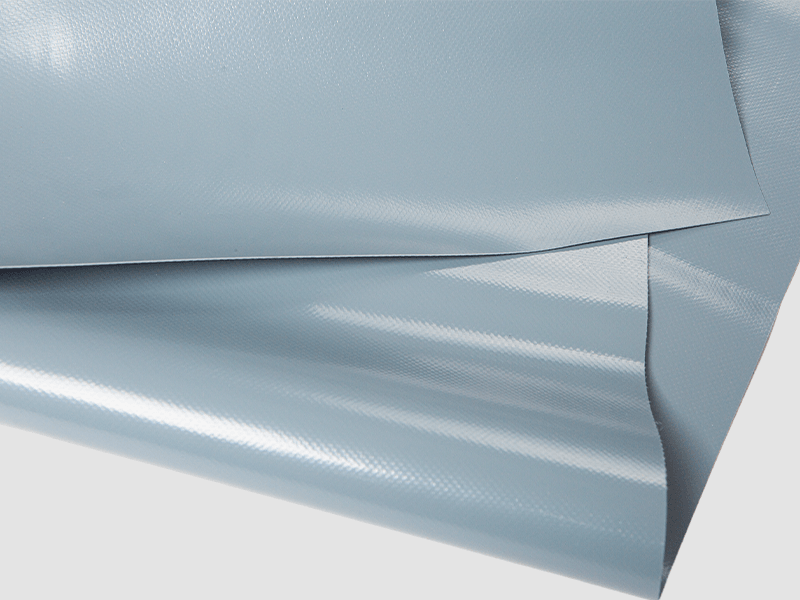
PVC Coated vs. PVC Laminated: Which One Do You Need?
Both manufacturing methods produce waterproof PVC fabric, but they differ in construction and, consequently, in performance profile. Understanding the distinction is essential when matching material to application.
| Property | PVC Coated Tarpaulin | PVC Laminated Tarpaulin |
|---|---|---|
| Construction | PVC compound applied directly onto base fabric via knife-over-roll coating | Pre-formed PVC film bonded to base fabric under heat and pressure |
| Surface finish | Matte or semi-gloss; consistent texture | Smooth, high-gloss or embossed options available |
| Peel resistance | High — PVC penetrates fabric weave for strong mechanical bond | Depends on adhesive system; generally slightly lower |
| Weight range | Typically 400–900 GSM for industrial grades | Wide range; suitable for lighter applications |
| Best for | Heavy-duty industrial covering, truck tarps, long-term outdoor use | Signage substrates, tent fabric, applications requiring precise surface finish |
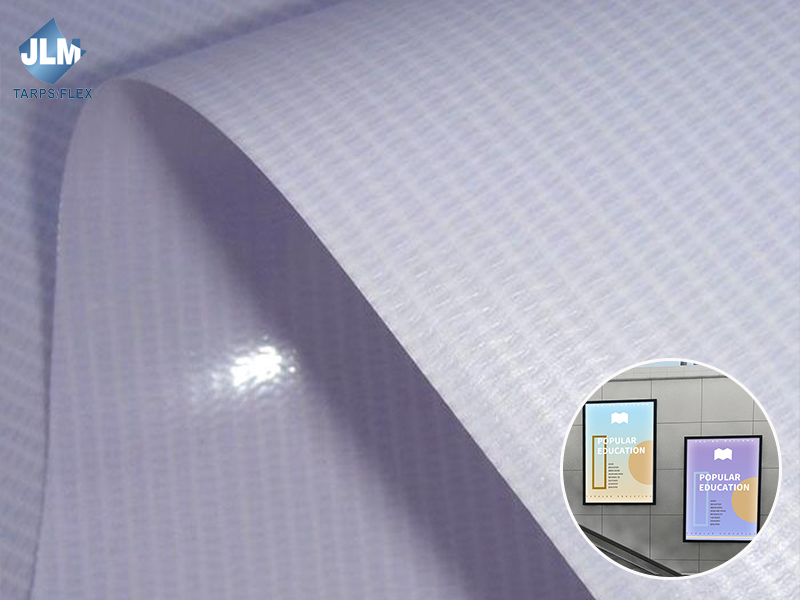
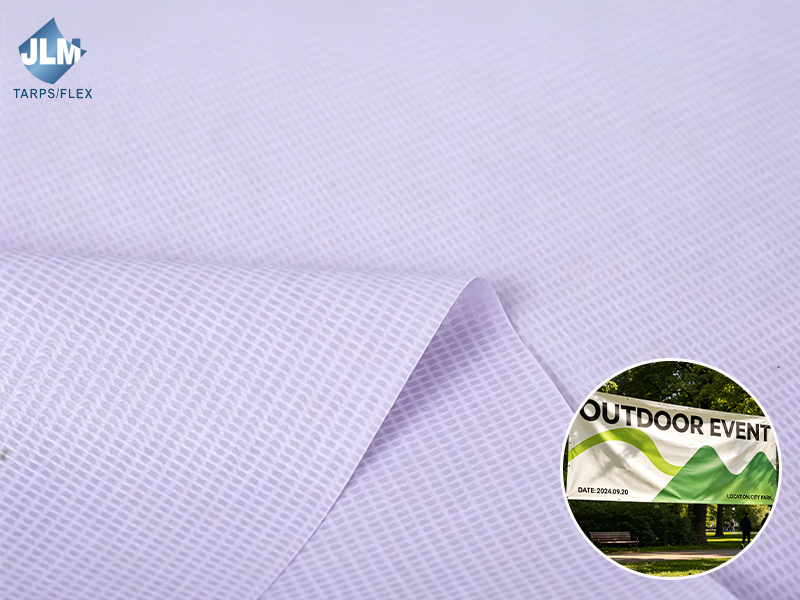
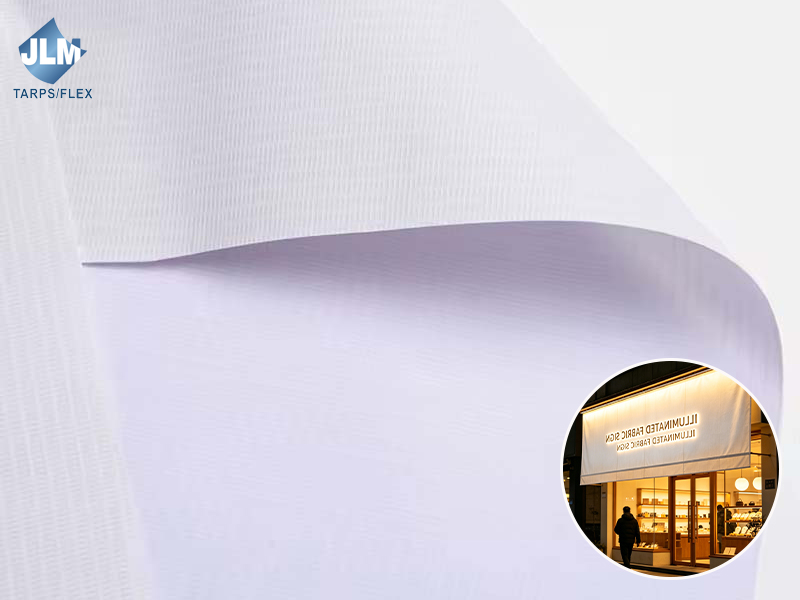
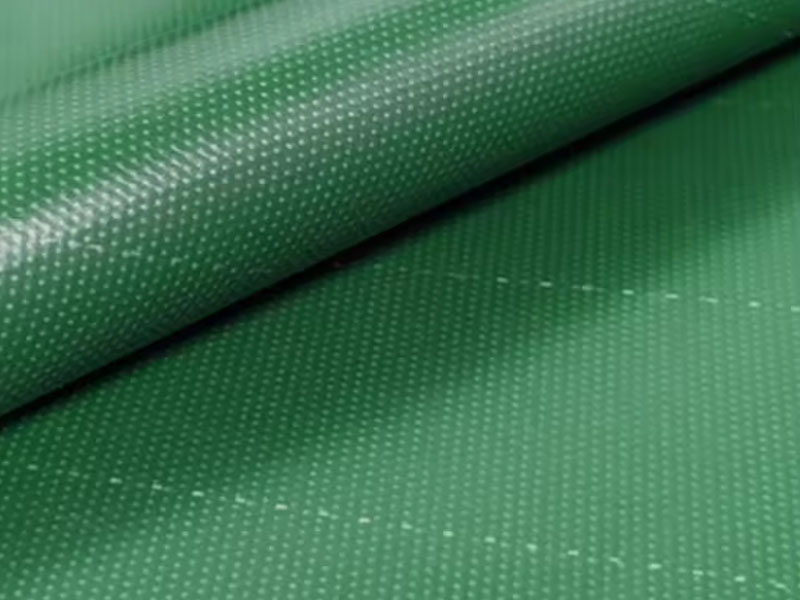
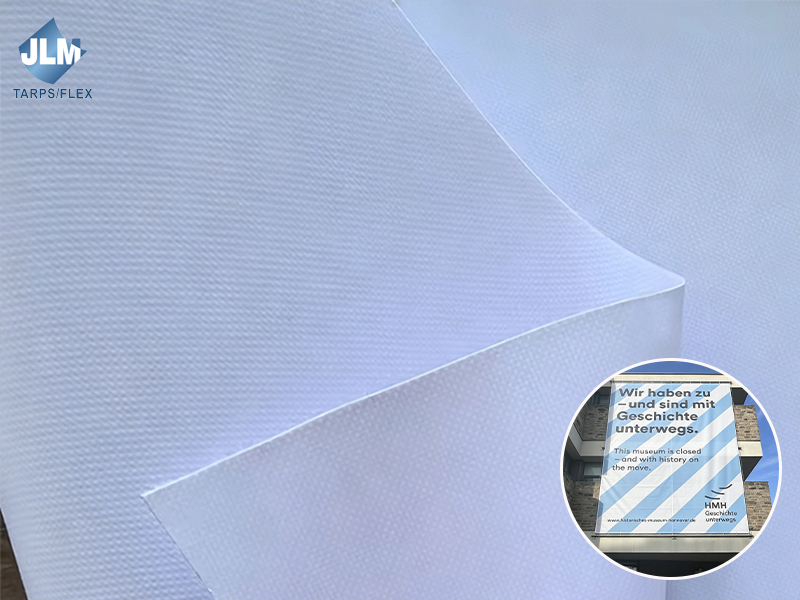
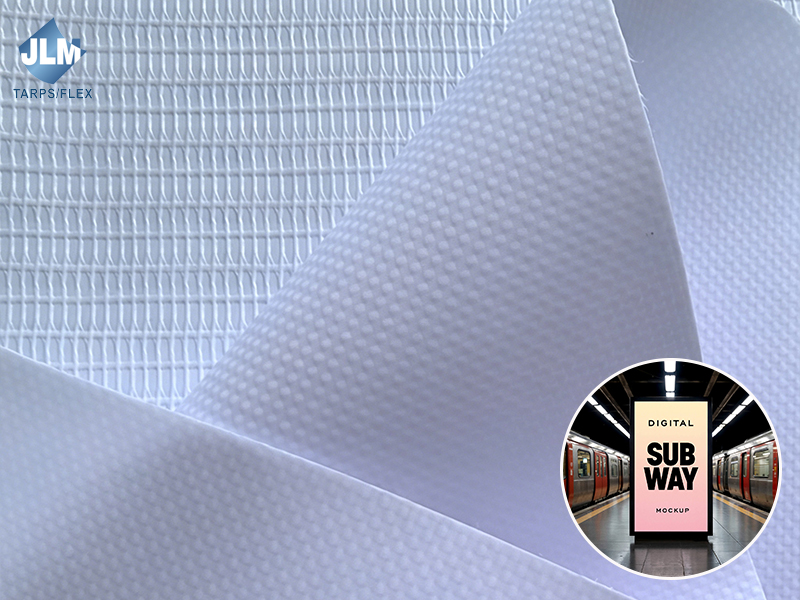
PVC coated tarpaulin for industrial protection is generally the specification of choice where long-term durability and resistance to abrasion are the primary concerns. The coating process allows the PVC to bond mechanically with the weave of the base fabric, producing a material that resists delamination under stress and repeated flexing. PVC laminated tarpaulin for superior tear resistance is preferred in applications where surface aesthetics, printability, or specific thickness tolerances are critical — including tent fabric, advertising substrates, and architectural membranes.
For most heavy-duty outdoor covering and cargo protection applications, coated construction offers better value. For applications where the surface will be visible or printed, laminated construction typically delivers a superior result.
Key Factors to Evaluate When Sourcing PVC Waterproof Material
Not all PVC waterproof fabrics are equal. Specifications can vary significantly between suppliers, and the differences matter in real-world performance. Several parameters deserve close attention before placing an order.
GSM (grams per square meter) is the most immediate indicator of material weight and, broadly, durability. Lighter fabrics in the 300–500 GSM range suit temporary shelters, banners, and light covers. Industrial tarpaulins and tensile membranes typically specify 650–1,050 GSM. Heavier materials are not inherently better — oversized GSM adds weight and cost without benefit when the application doesn't demand it — but undersizing for the actual use leads to premature failure.
Denier and thread count of the base fabric determine tear strength and dimensional stability. A high-denier warp and weft (typically 500D–1300D for industrial grades) ensures the fabric resists tearing under load even when the PVC layer is punctured or abraded. This is particularly relevant for truck tarps and cargo covers that experience mechanical stress during use.
Seam and weld integrity matters as much as the material itself in finished products. PVC can be heat-welded to produce seams that are as strong as, or stronger than, the parent material. Sewn seams, by contrast, leave needle holes that require additional sealing treatment to maintain waterproof integrity. When reviewing product specifications or requesting samples, confirming the seam method and weld strength is as important as reviewing the base fabric data.
Flame retardancy and certifications are mandatory in many end-use contexts. Tent structures, architectural membranes, and event infrastructure typically require materials meeting specific fire safety standards. Confirming compliance with the relevant regional certification before procurement prevents costly substitutions later in the project.
UV stabilizer content determines outdoor service life. Materials intended for permanent or semi-permanent outdoor installation should specify UV-resistant formulations, which significantly extend usable life compared to basic grades. A higher upfront cost in UV-stabilized material typically delivers a lower cost per year of service in exposed applications.
PVC waterproof fabric remains the most widely deployed solution for industrial, commercial, and outdoor waterproofing precisely because it delivers on these parameters consistently and at competitive cost. Buyers who understand the specification differences — and match them to actual operating conditions — will consistently get better performance from their material investment.